

Pain travelling from the lower back or buttock into the leg can be difficult to ignore. It may feel sharp, burning or electric, while some people notice leg tingling, numbness or weakness instead.
These are commonly associated with irritation or compression affecting the sciatic pathway. The NHS explains that this problem typically affects the bottom and the back of one leg, sometimes extending into the foot and toes. Symptoms can develop suddenly or gradually and may become more noticeable with movement, coughing or sneezing.
What Are the Most Common Sciatica Symptoms?
The pattern can vary considerably from one person to another. Some people experience discomfort from the buttock to the calf, while others feel changes all the way into the toes.
Common features include:
- Sharp or burning discomfort travelling down the back of one leg.
- Pins and needles affecting the leg, foot or toes.
- Leg tingling that may come and go.
- Numbness in part of the leg or foot.
- Leg weakness, particularly when the irritation is more significant.
- Symptoms that become more noticeable during movement, coughing or sneezing.
- Lower back discomfort, although the leg symptoms may be more prominent.
Because several musculoskeletal and neurological problems can create similar sensations, the location of the discomfort alone cannot establish exactly what is causing it.
What Causes Discomfort to Travel Down the Leg?
The sciatic pathway originates from the lower part of the spine and continues through the buttock and leg.
Problems can arise when structures around the lower spine irritate or place pressure on the relevant nerve roots. The NHS identifies several possible causes, including a slipped disc, spinal stenosis, spondylolisthesis and back injury. A slipped disc is listed as the most common cause.
Another term readers may encounter is lumbar radiculopathy. This describes symptoms associated with irritation or compression of a nerve root in the lower spine. It is a clinical term rather than something that should be self-diagnosed from internet searches alone.
An appropriate examination can help establish whether the pattern appears musculoskeletal and whether further investigation or referral is necessary.
When Should You Arrange an Assessment?
Professional assessment may be useful when discomfort has persisted for several weeks, is getting worse or is interfering with everyday activities.
The NHS recommends contacting a GP when symptoms have not improved following home management, are worsening or are preventing normal daily activities.
At TrueBlue Chiropractic, an initial appointment is designed to build a clearer picture of what you are experiencing before deciding whether care is appropriate.
This may include discussing when the problem started, examining movement and function, and checking for findings that could indicate a need for medical referral.
Where Can Manual Therapy Fit Into Care?
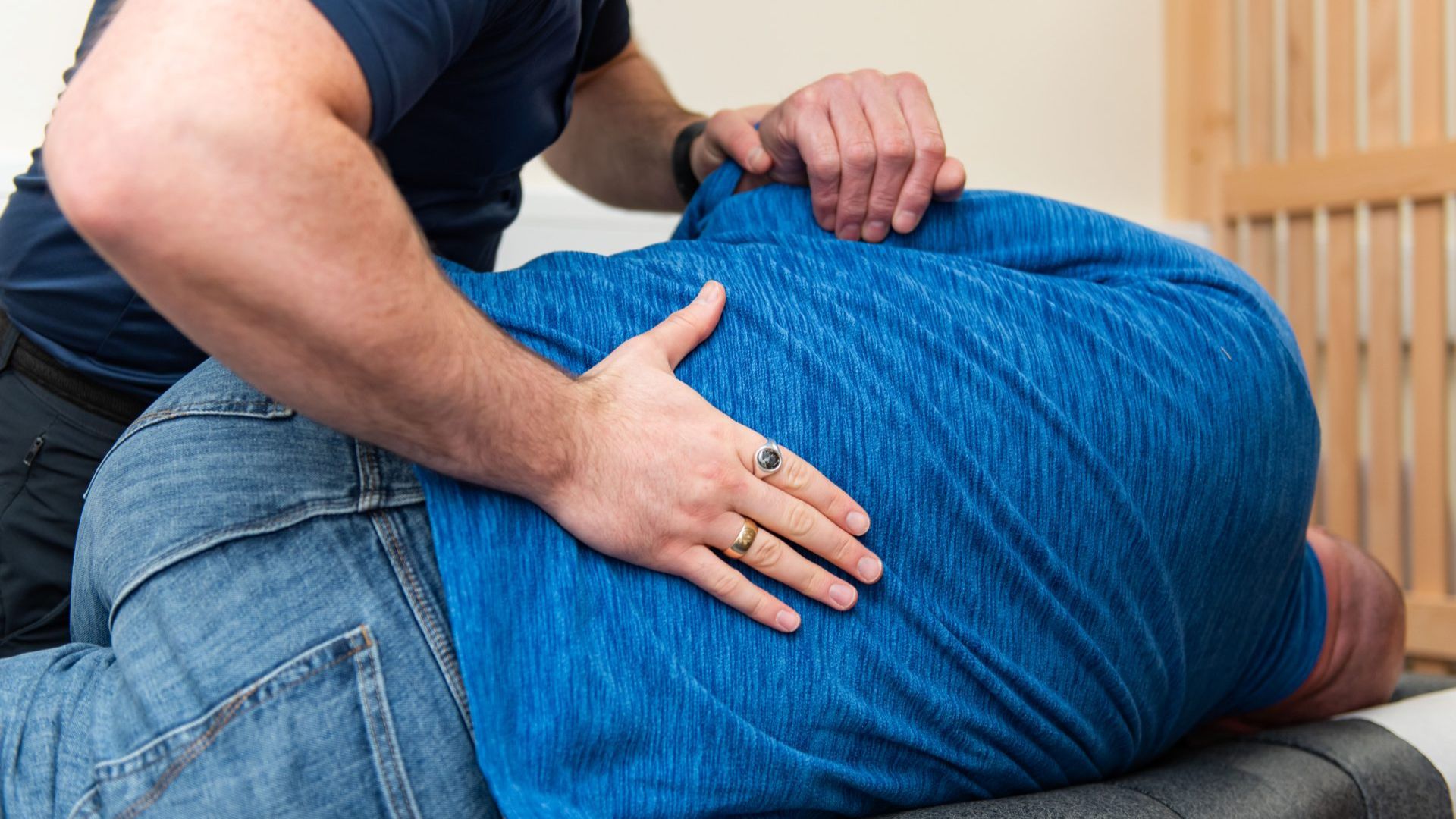
Manual approaches may be one part of a broader management plan for suitable patients.
NICE guidance for low back problems with or without referred leg symptoms emphasises self-management, normal activity and exercise. It also includes manual therapy within broader management options rather than presenting hands-on care as a stand-alone solution.
For that reason, responsible care should be individualised. It may combine hands-on techniques with movement advice, exercises and practical recommendations based on what an assessment finds.
No practitioner should promise that one technique will work for every person or suggest that all cases have the same underlying cause.
Do You Always Need a Scan?
Not necessarily.
NICE states that imaging should not routinely be offered in a non-specialist setting for people with low back problems with or without referred leg symptoms. Imaging may be considered in specialist settings when the result is likely to change management.
This is one reason a thorough clinical assessment is usually more useful as a first step than assuming an MRI or X-ray is automatically required.
A practitioner can also identify circumstances in which onward investigation may be appropriate.
How Can You Reduce the Chance of the Problem Returning?
There is no guaranteed way to prevent recurrence, but maintaining regular movement can help support general back health.
The NHS recommends staying active, exercising regularly, using an appropriate lifting technique and considering sitting and standing posture.
For people whose problems repeatedly return, it can also be useful to look at everyday factors such as work demands, training load, prolonged sitting and movement habits.
That approach focuses less on finding a quick fix and more on improving long-term confidence and capacity.

What Should You Do if Symptoms Are Affecting Everyday Life?
If ongoing leg discomfort, altered sensation or restricted movement is making work, sleep, exercise or normal daily activities difficult, an assessment can help clarify the next appropriate step.
TrueBlue Chiropractic provides musculoskeletal assessment and care from its clinic in Lichfield. Where chiropractic care is appropriate, recommendations can be tailored to the individual. Where findings suggest that another healthcare professional is more appropriate, referral should take priority.
If you would like to discuss your symptoms before deciding what to do next, contact TrueBlue Chiropractic or book an initial assessment.